
What is Kanban? Complete Guide
Learn the foundations of Kanban, including pull flow, WIP limits, metrics, cadences, classes of service and a practical path to implementation.
Read articleOffline Kanban Board
Explore practical content about Kanban, Offline Kanban, workflow visibility and everyday execution with a board first mindset.
This page gathers Kanban articles for people who want a clearer, more private and more effective way to organize work with visual boards.
The KanbanApp blog works as a content hub about Kanban fundamentals, visual workflow management, local-first productivity and practical ways to make work more visible day to day.
Here you can find a complete guide to Kanban, a practical article about the board first approach, an article about why an Offline Kanban board app is so useful in restrictive corporate environments and a new article on how Kanban strengthens Scrum implementations.
Learn the foundations of Kanban, including pull flow, WIP limits, metrics, cadences, classes of service and a practical path to implementation.
Read article
A practical article about using a Kanban board as the center of daily execution to reduce forgetfulness, stress and mental overload at work.
Read article
Discover why KanbanApp works as an Offline Kanban Board App with local storage, no login and a strong fit for restrictive corporate environments.
Read article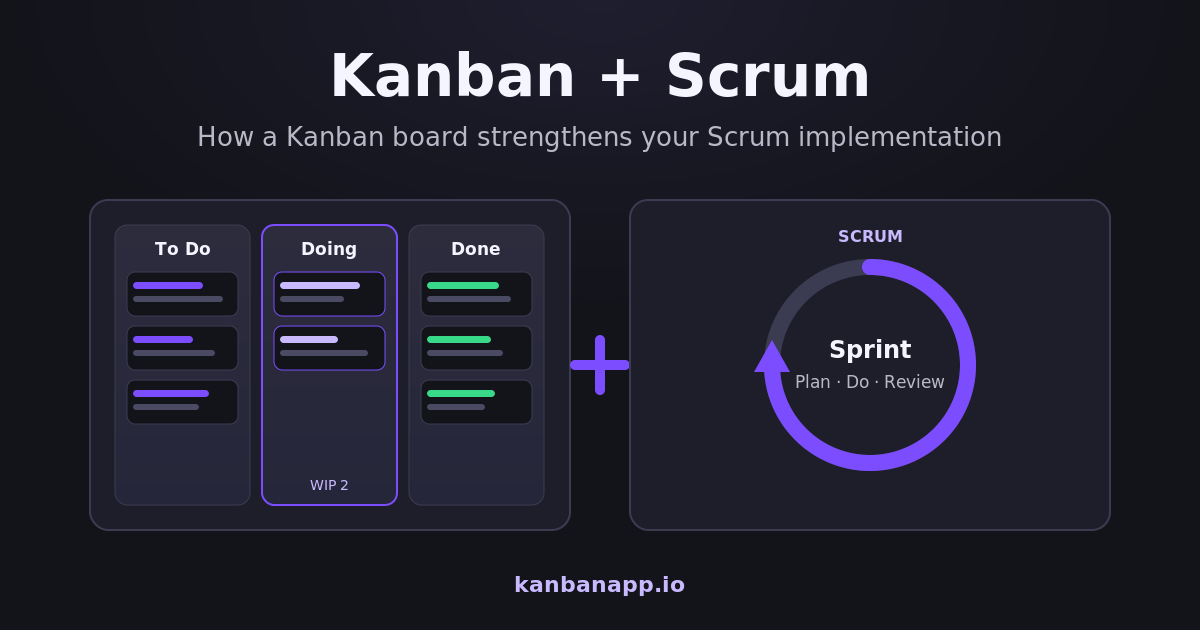
Understand how Kanban relates to Scrum and how a visual board improves sprints with backlog visibility, WIP limits, flow metrics and Scrumban.
Read article
An introduction to Scrum: Sprints, the pillars of transparency, inspection and adaptation, and the first steps to adopt the framework.
Read article
Product Owner, Scrum Master and Developers, the five events, the three artifacts and their commitments, plus the Scrum values.
Read article
Forming the Scrum Team, organizing the Product Backlog, choosing Sprint length, running events and adapting the framework to reality.
Read article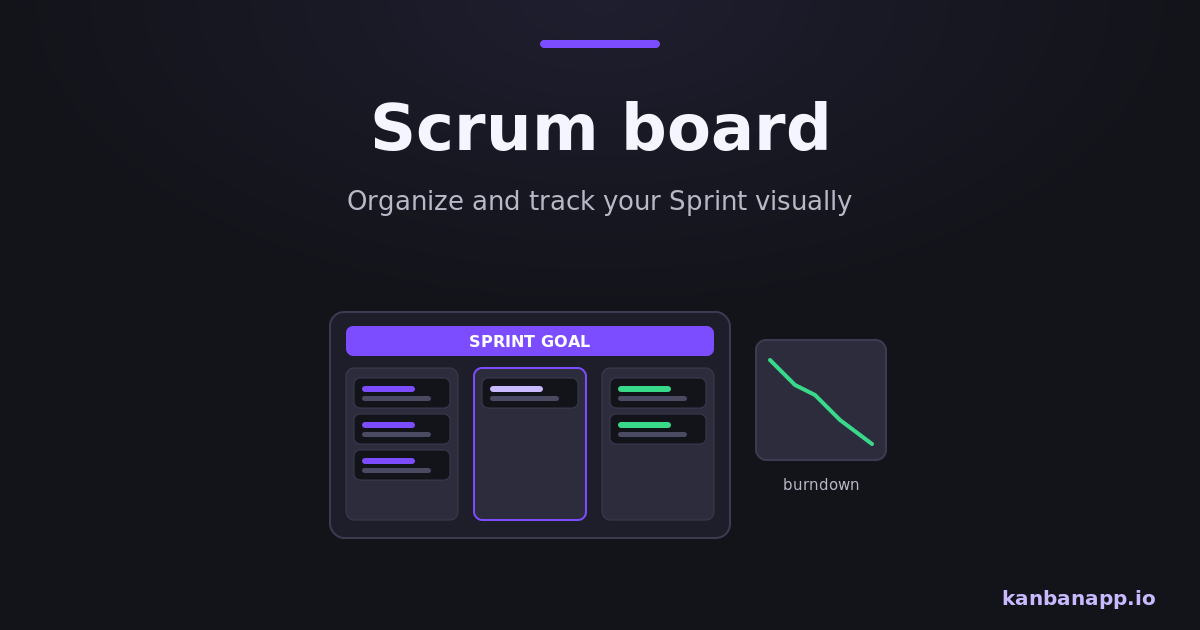
Columns, cards, priorities and task movement that increase transparency and reveal problems early during the Sprint.
Read article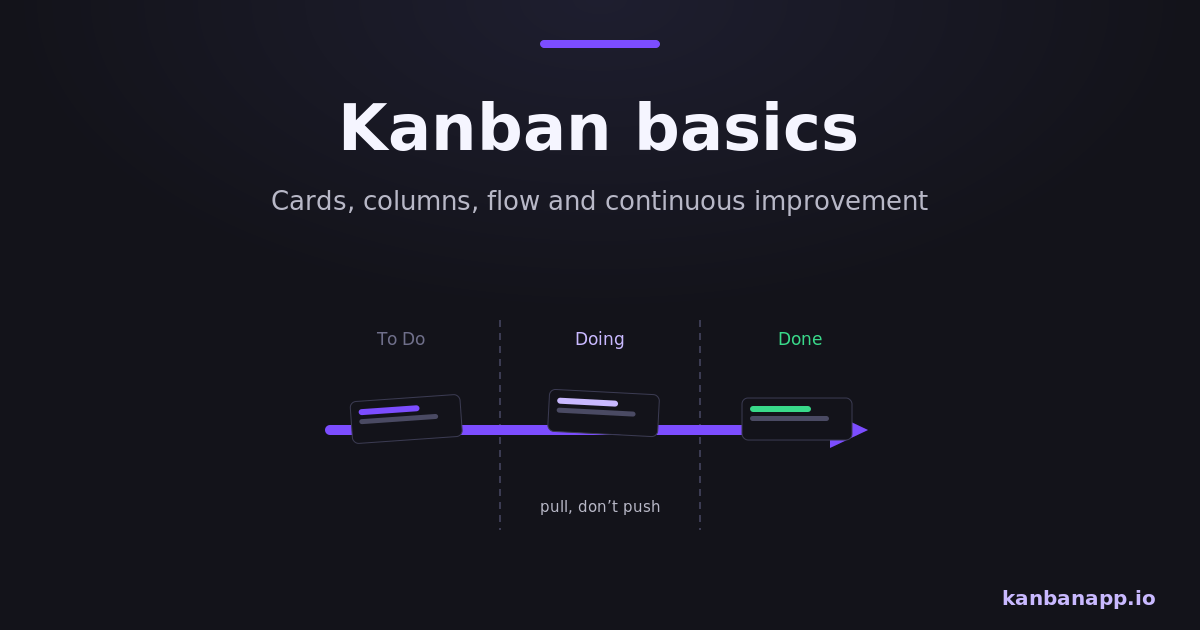
Cards, columns, continuous flow, the pull system, work in progress and continuous improvement, with examples for different teams.
Read article
The Kanban Method beyond the board: evolutionary change, service orientation, flow management, explicit policies and feedback loops.
Read article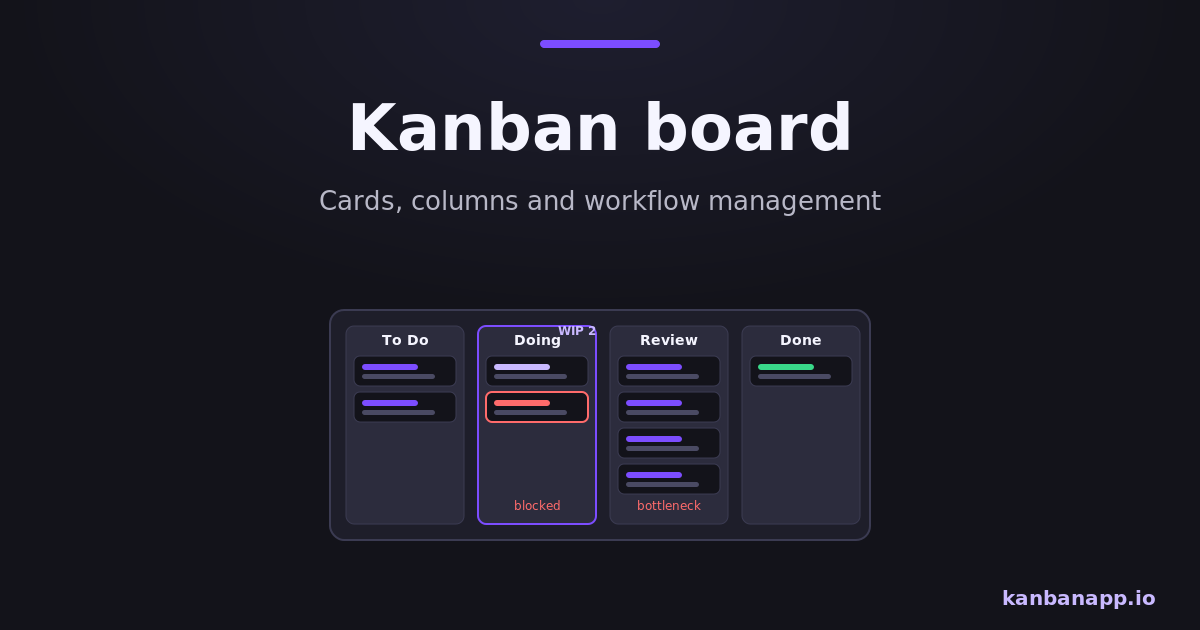
How to represent each task as a card, organize stages into columns and track work to completion, making bottlenecks visible.
Read article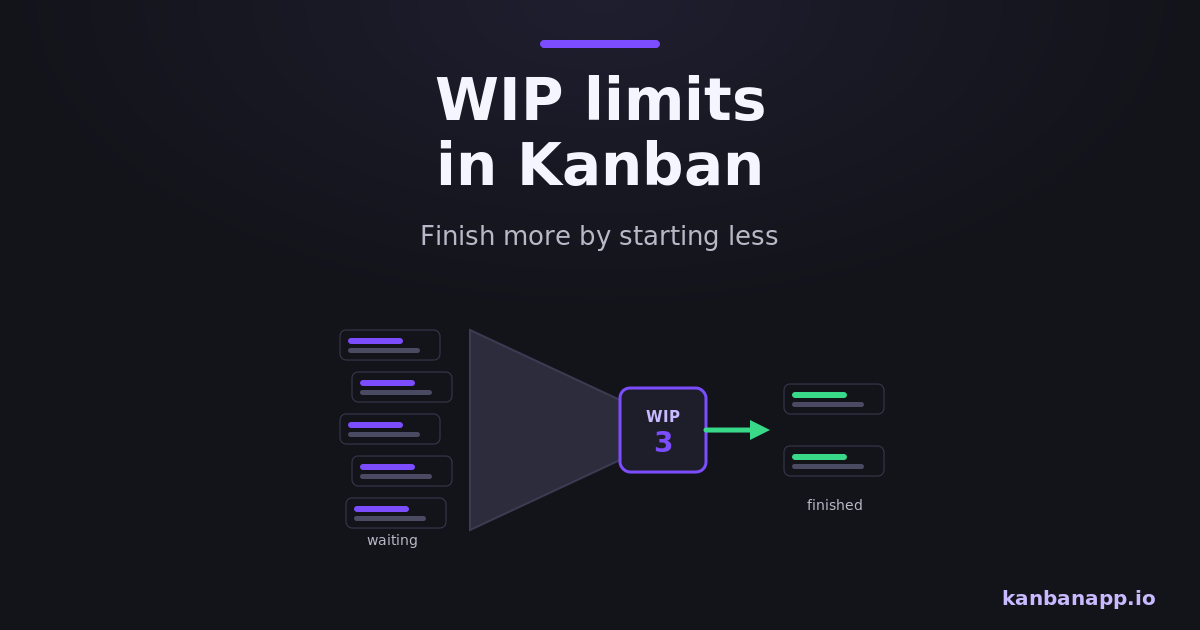
Why limiting simultaneous tasks reduces multitasking, improves focus, reveals bottlenecks and pushes the team to finish before starting.
Read article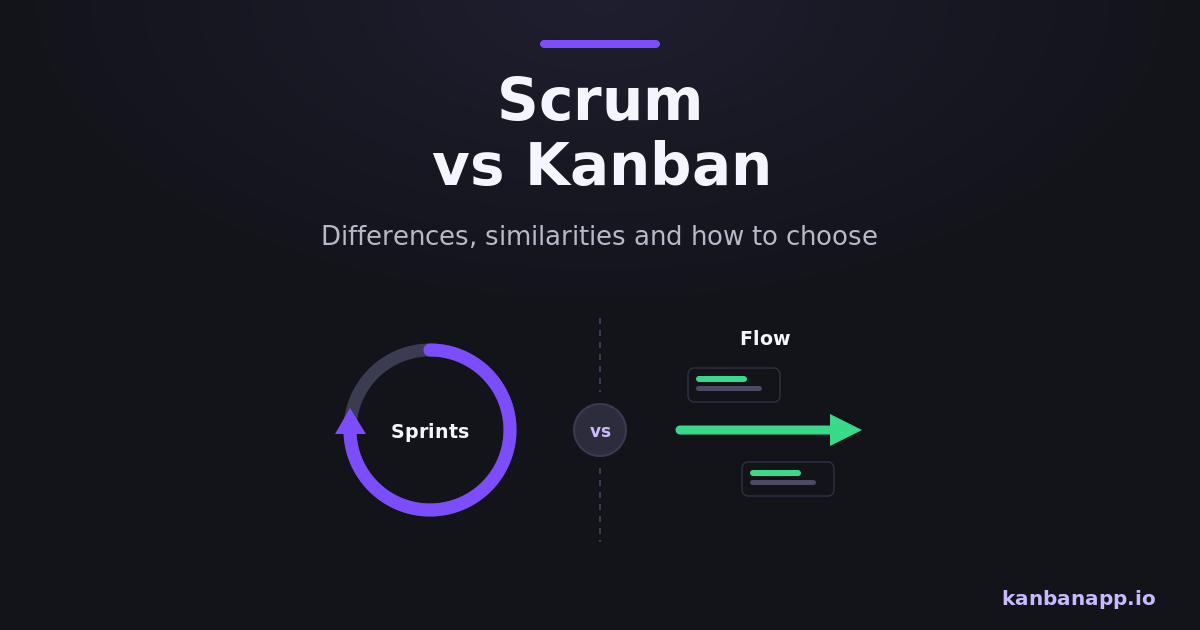
Sprints versus continuous flow, roles, planning, priority changes, WIP limits, delivery frequency and how to choose between them.
Read article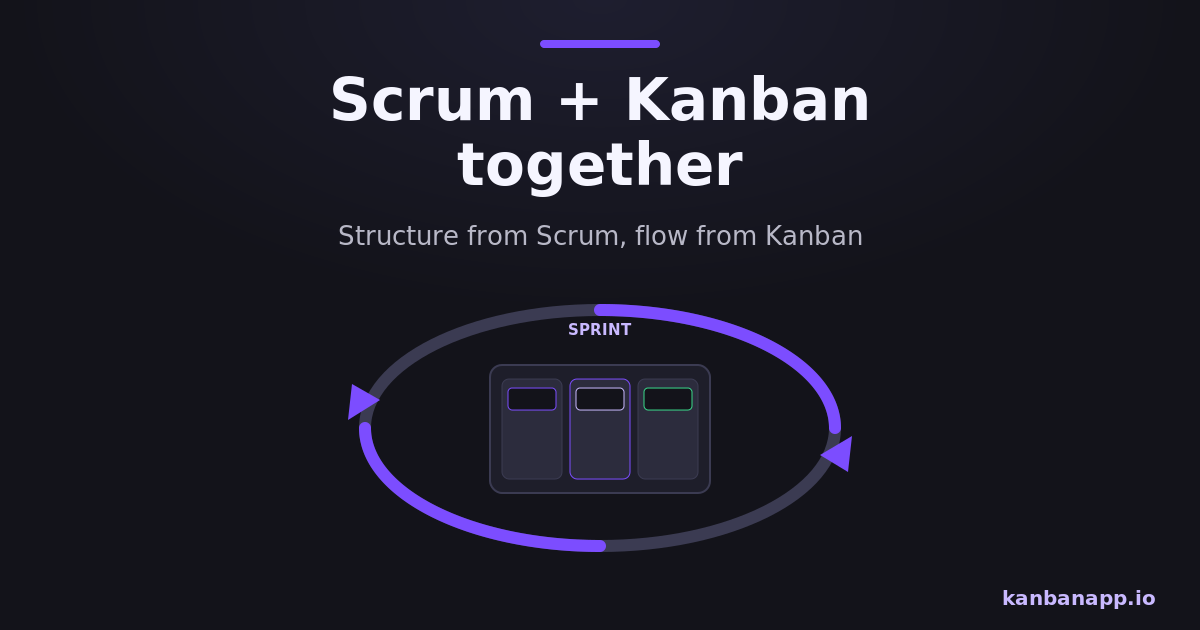
Scrum organizes accountabilities, goals, events and Sprints while Kanban makes work visible, controls flow and exposes blockers.
Read article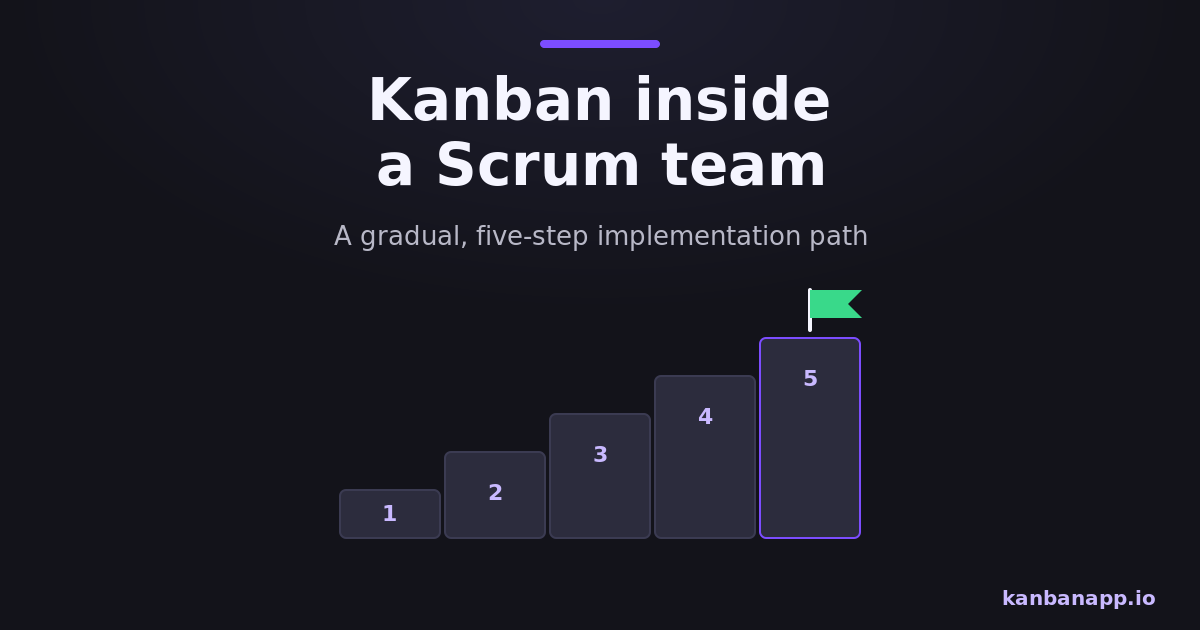
A gradual path: map the real workflow, build the board, set WIP limits, mark blockers and track flow during Sprints.
Read article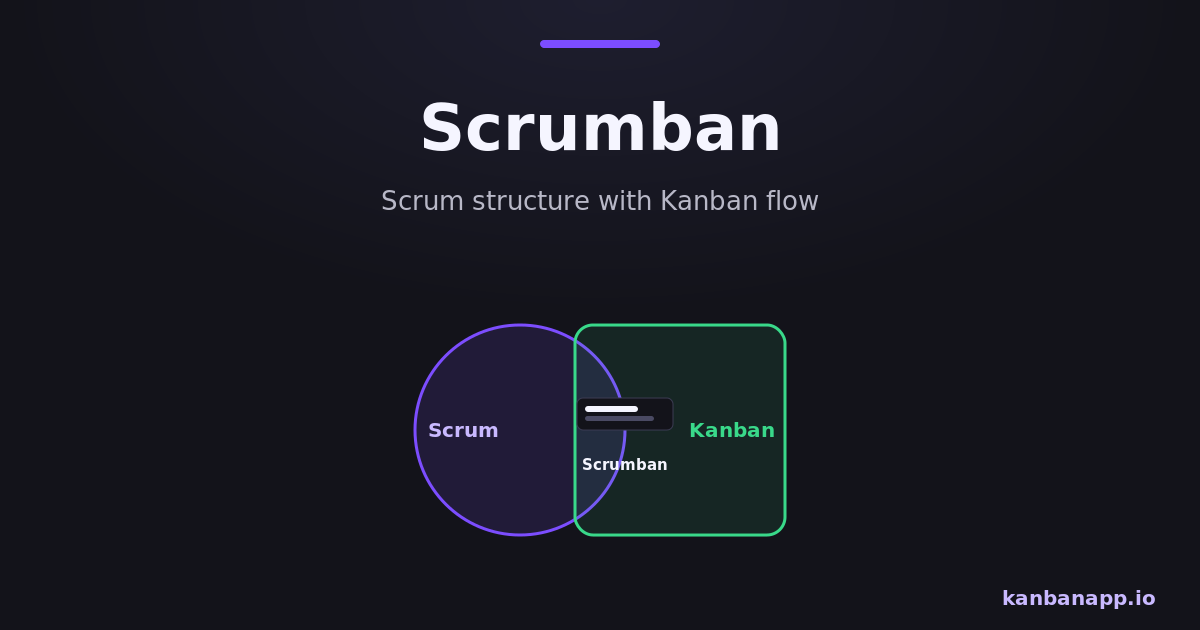
Keeping Scrum elements like planning and Sprints while adding Kanban practices to control WIP, improve flow and increase flexibility.
Read article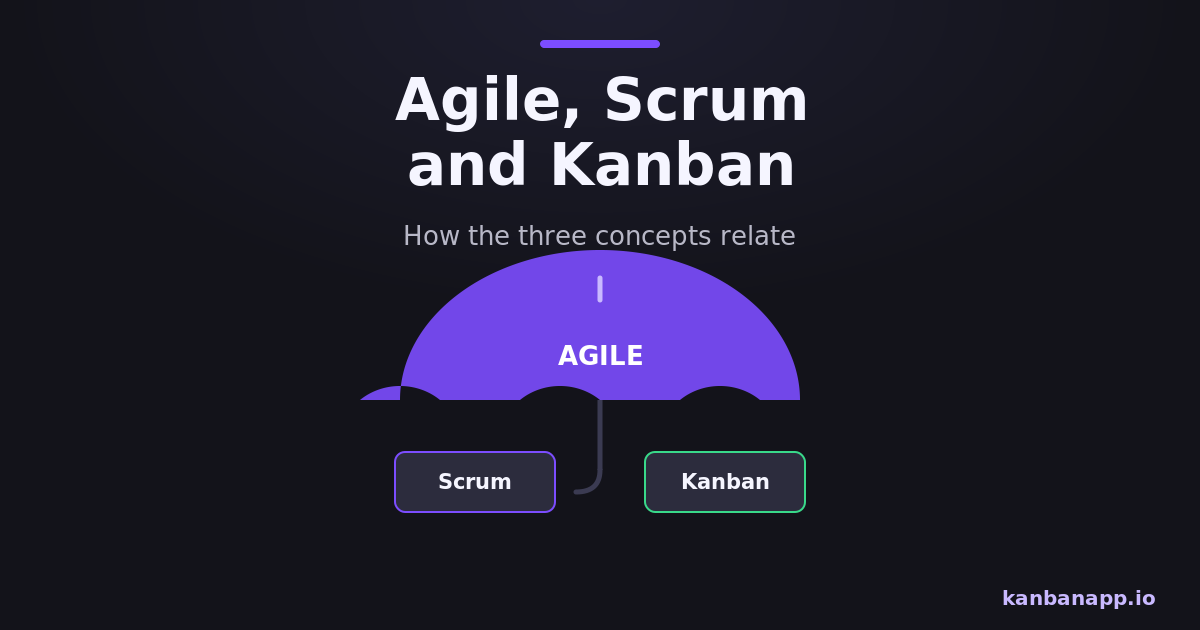
Agile is a set of values and principles; Scrum and Kanban are practical ways to organize work. Understand how the three relate.
Read article
The reference document that formally defines Scrum: theory, values, accountabilities, events, artifacts and commitments.
Read article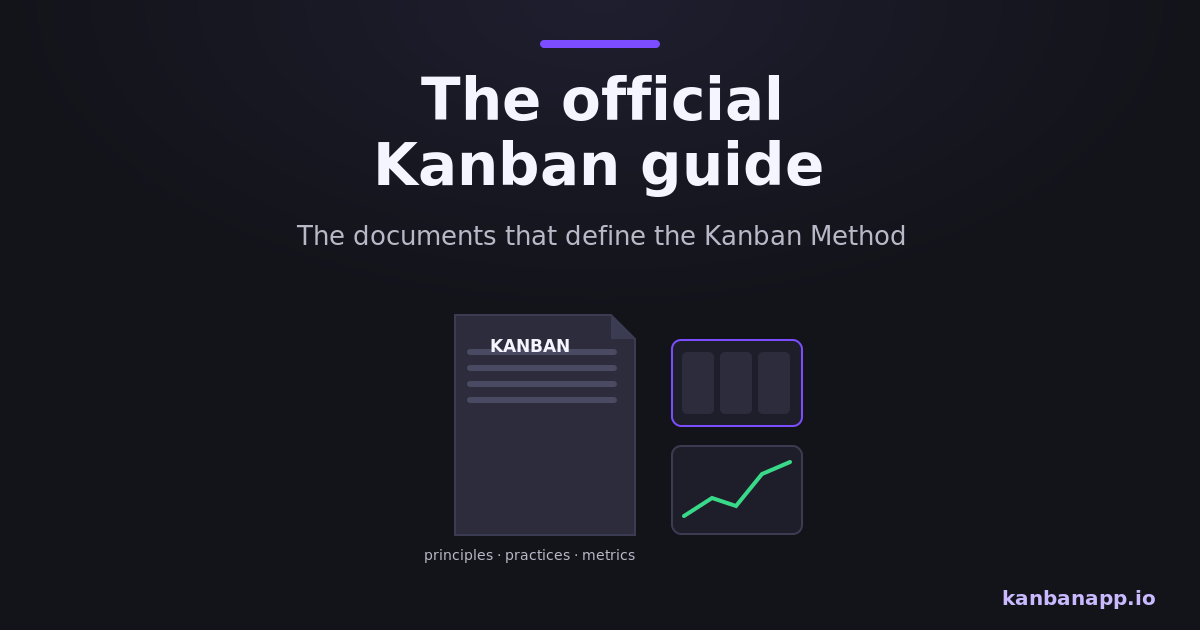
The reference documents of the Kanban Method: principles, practices, pull system, WIP limits, metrics, cadences and evolutionary improvement.
Read article